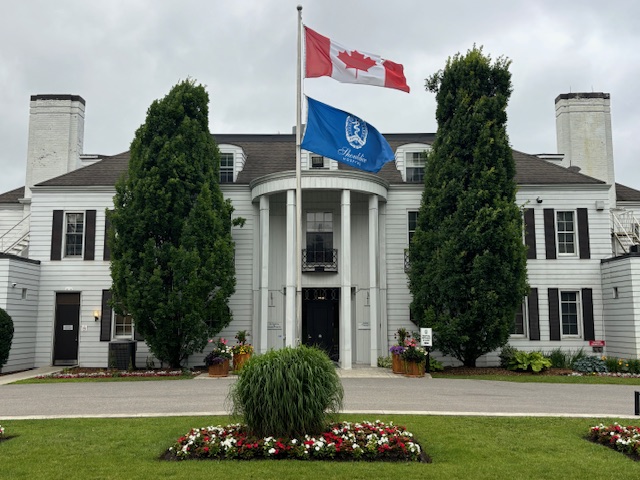
Introduction: Do not pass go. Do not collect $200. Go directly to Shouldice Hospital.
It was not my intention to travel to Toronto this summer. Right inguinal hernia for past decade, became uncomfortable in February. Treatment modality: ignore hernia until it may no longer be ignored. Visited doctor in Adelaide Australia, and forwarded exam report to Shouldice. Four-month wait list, scheduled for surgery July 11th. Pleased to report that the procedure went well, and now I have matching scars.
Background: Shouldice Hospital in Toronto Canada, performs 7,000 hernia repairs annually, and is the subject of a Harvard Business School case study. The private hospital, founded in 1945, has 89 beds, and performs non-mesh hernia repair.
I was familiar with the hospital, having used the case study as a graduate student at University of Virginia. Lived in Ottawa Canada when I served as CFO for Epocal. Diagnosed with left inguinal hernia, and treated successfully at Shouldice in 2008.
Hernias are common in males, with 50% incident rate. In fetal development, the testicles drop down from the abdomen, and the opening does not always close afterwards. Born six weeks early, as a twin, it is likely that I was only half-baked. It could also be that heavy lifting in the Marine Corps exacerbated the condition (personal record was 450-pound deadlift, 3x bodyweight).
TUE 09 July: limited travel options, bus, train, or flight via New York City. Delay or cancellation could jeopardize admission window. Depart Connecticut, 500-mile drive to Oshawa, located east of Toronto. Weather is hazy, hot, and humid; cross into Canada at 1000 Islands, north of Syracuse; scenic and beautiful in the summer.
No issues crossing the border, concerned that I could be detained, as I borrowed my parents car. Canada customs agent inquired into the nature of my visit, and appeared sympathetic when he learned of the pending surgery.
Always enjoy Canada, and seeing the red maple leaf flag in the air. Stay overnight at AirBnB; sort of wished that I stayed at a hotel, almost wanted something impersonal.
WED 10 July: drive to Shouldice Hospital in Thornhill, outside Toronto. Admitted in the morning, surgeon exam in the afternoon; tedious, tiring day, hurry up and wait. Heavy rain, remnants of Hurricane Beryl, give way to cloudy skies. Hospital treats 30-patients per day (surgery Monday through Friday). Dinner was in the dining room; room was loud, difficult to hear. Didn’t feel sociable, and didn’t talk with anyone.
THU 11 July: I am patient number four (of six) with my surgeon. Groin area shaved followed by shower, last shower for one week. Brought down to pre-op at 10am, seated under heated blanket and watch sports television with other patients.
Nurse unable to insert IV line into my hand, rather than stab again, defers to the anesthesiologist. Surgeon escorted me to operating room at 11:30am, there is classical music in the background. Pants pulled down to my knees, hospital gown pulled up to my chest, there is no pride, and likely too scared, nervous, or anxious to care.
Anesthesiologist asks my bodyweight; at 125-pounds, I am one of her lighter patients; she stabs me three times with exasperation trying to hit a vein, difficult following 15-hour fast in cold surgical theater. Dislike needles and sight of blood; nurse places oxygen mask over my face, and likely sensed the fear in my eyes. Anesthesia, similar to that used during colonoscopy, is cold when it enters the body; I pass out.
Wake up as surgeon finishes; feel sharp pulling and tugging. Coming out of anesthesia, feel lethargic, as if body weighs 1,000 pounds. Speech is sluggish, overwhelming urge to hug anyone or hold someone’s hand, but I am alone. Wheeled into patient room before 1pm, hooked to IV for hydration, and sip water; remain in bed four hours. In the afternoon, nurse checks blood pressure (pre-op 110/70 | post-op 135/80), helps me out of bed, not dizzy or flushed, and allowed to make the “Shouldice Shuffle” to nurses station for Tylenol and Toradol (Ketorolac) to manage pain and discomfort.
Walk the hallway a few times, and talk with other patients who also had surgery; many patients, like me, are more talkative than they were on Tuesday when admitted. Some of us watch President’s (un-convincing) NATO press conference. At bed time, ice pack on the wound; sleep poorly, uncomfortable to move from side to side.
FRI 12 July: use another ice pack before getting out of bed at 6am; take a walk outside the hospital facility, which used to be an estate, and appreciate its grounds and garden. Take the stairs to dining room and enjoy coffee before breakfast. Afterwards, doctor exam; removes half the surgical staples. At 11am, patients gather in the lounge for exercise class, and enthusiastically and dutifully, perform gentle stretches to re-introduce range of motion and relax the scar tissue. Part of the Shouldice method is active recovery. Hospital serves four meals per day, breakfast, lunch, dinner, and evening snack; patients are well fed; fruit, vegetables, prune juice, and bran flakes.
SAT 13 July: Affordable Care Act (ACA) is neither affordable or portable. If I was enrolled, which I am not, I would have to seek care in Houston Texas. I am enrolled in Sedera, an Austin Texas-based health share. Used its Savvos platform to notify of pending hernia treatment. One week at Shouldice cost $6,500, five-line invoice on one piece of paper. Less expensive than Boston Hernia Center or Oklahoma Surgery Center; neither would promise non-mesh repair. I paid $3,500 and Sedera paid $3,000. Sedera, Savvos, and Shouldice communication was transparent, and Sedera funded its share prior to the procedure. Some customers have had poor experience with health share; my example illustrates that health share may work effectively.
After breakfast, surgeon removed remaining staples and surgical dressing, signed discharge; settled my account with the payables office, and cleared to depart Sunday morning. In private, examine the wound. It is swollen and bruised, various shades of yellow, orange, blue, and purple. Suggestion: no laughing, no sneezing, no coughing.
SUN 14 July: sleep poorly, wake up early, check-out at the nurse’s station, and depart 4am; grateful to avoid Toronto rush hour traffic. Two hours to reach US border at Buffalo, and clear customs with a single question from the agent, still wearing hospital identification tag on my wrist. At rest stops, getting in and out of the car is slow, have to pull my legs into the car, one by one. Driving was not as uncomfortable as I feared, and complete the 550-mile drive in nine hours.
Once home, sleep much better, without the noise and distraction at the hospital. Remain quite sore, some movement is quite sharp at times; Tylenol is mostly useless.
THU 18 July: one week following surgery; stopped taking Tylenol, only marginally effective for pain. Swelling and bruising down considerably, physical movement is less uncomfortable. Appreciate taking my first shower, key is to minimize risk of infection.
Resume yard work, nothing strenuous, no heavy lifting; consider any movement better than sitting on the couch, and part of the rehabilitation.
THU 25 July: two weeks following surgery; resume light exercise to re-introduce range of motion; can’t yet perform push-ups. Steri-strips removed; not in pain, but still sore.
Conclusion: medical care frequently discussed among Shouldice patients. Most of the patients made an educated decision to seek treatment, and also held well-informed opinions regarding medical care.
New York Times Opinion, The Best Healthcare System in the World: Which One Would You Pick (18 SEP 2017), compared United Kingdom, Canada, Singapore, United States, France, Australia, Germany, and Switzerland; Switzerland earned first place.
Among wealthiest OECD nations (2022 Peterson-KFF), United States has lowest life expectancy (77.5-years) with highest healthcare cost per capita ($12,600); peer average 82.2-years and $6,700 cost per capita. United States also has highest rate of infant mortality (5.4 per 1000 live births) and highest rate of maternal mortality (23.8 per 100,000 live births). It’s odd, in the United States, citizens have the right to own a gun, but, no right to universal health care. Suggestion: don’t get sick.
If you ever require hernia repair, recommend Shouldice Hospital. Twice.
 garthmonroe