My Father served in the Air Force, in Nagoya (1958). I served in the Marine Corps, in Okinawa (1996). Traveled to Japan on business for Epocal product launch (2010). Two months to explore Japan, from Hokkaido in the north, to Okinawa in the south, and everything in between, mostly by train.
Post is titled after one of my favorite movies, Lost in Translation (2003), about two lost souls. Roger Ebert’s Chicago Sun Times review is as thoughtful as Sophia Coppola’s screenplay. Movie’s final scene is poignant, it was unscripted; the dialog was not recorded; we may never know what Bob whispered to Charlotte. In homage to the movie, contemplated staying one night at Tokyo Park Hyatt; appreciate its elevator chime, but, not at $1500 per night.
Some elements of the trip appear in “The Daily” including a mishmash of topics. Photo gallery has trip images, captions available when viewed in slide show mode.
TUE 02 April: pleased to recover from stomach flu before Tuesday’s ten-hour, 5,000-mile flight from Sydney to Tokyo. Dinner the night before, white rice, to not tempt fate. Last summer, migraine during flight from Jordan to Kuwait, miserable.
Japan Airlines, Boeing 787, bathroom has bidet in economy class. Most airplane bathrooms are so small, that a person can barely turn around. This bathroom is as large as a walk-in closet. If motivated, passenger could have a threesome.
Upon arrival at Tokyo Haneda Airport, customs is busy, appears that three wide-body aircraft arrived at the same time. Serpentine lane ropes look like they were harassed by toddlers at recess. 90-day tourist visa issued upon arrival. One-hour subway north, to Asakusa station; standing room only during the evening rush-hour commute.
Check into hostel, and enjoy bowl of soba at crowded lunch counter. Long day, 22-hours, including ten-hour flight and two-hour time zone change. Ready to collapse, fall into a hole; not far from reality, stay overnight at capsule hotel.
Wake the next morning, intention is to get into the city before rain moves in at mid-day; visit Imperial Palace, exchange currency (credit card not accepted everywhere), visit Sensō-ji temple, and find razor blades.
Purchase metro day pass; visit notorious Shubaya “scramble” crossing; Meiji Jingu temple located within large woodland park; Tsukiji outdoor market, to sample food from street vendors; and Ueno Park, which houses Tokyo’s many museums.
Japan population 125-million (US: 330-million); Tokyo population 14-million (New York City: 8-million); Japanese economy $4-trillion (US: $25-trillion); Japan GDP per capita $34,000 (US: $76,000). Japanese pay 30% of healthcare costs; 70% provided by government; costs set and fixed by the government.
Exchanged $100 USD to yen (15,000) in the city at favorable exchange rate; credit card not widely accepted (ie. grocery stores, restaurants, subway, pharmacy).
FRI 05 April: temperature at sunrise 60-degrees; drops to 50-degrees before mid-day; depart from Tokyo station; teaming with people and frenetic energy; almost intimidating. Tokyo station hosts more than one-million passengers and 4,000 trains per day. Signage isn’t as clear as it could be, but, once on the correct platform, departing trains are well identified; subway south to Yokohama, major port city in the region, arrive one hour later.
Enter Chinatown section of Yokohama, quite spectacular, and drop off backpack at local hostel, only hostel in Yokohama; intention is to experience the environs of greater Tokyo. Visit Yokohama Art Museum, which was underwhelming; walk along the port to visit the restored, pre-World War I, red-brick warehouses, and peruse the many Chinatown food vendors, despite the weather.
Weather improves the next day, warms up to 65-degrees; visit Yamashita Park, with views of the Yokohama skyline, Harbor View Park, and the iconic Tsurumi Tsubasa Bridge. Nearby neighborhoods include seven, well-restored, western-style, wood-construction, turn of the century homes, preserved and maintained by the city, and open to the public. Return to city center, via Motomachi shopping district, and wrap-up at Yokohama Park, with an impressive display of tulips; flowers and locals appear all too eager for spring weather.
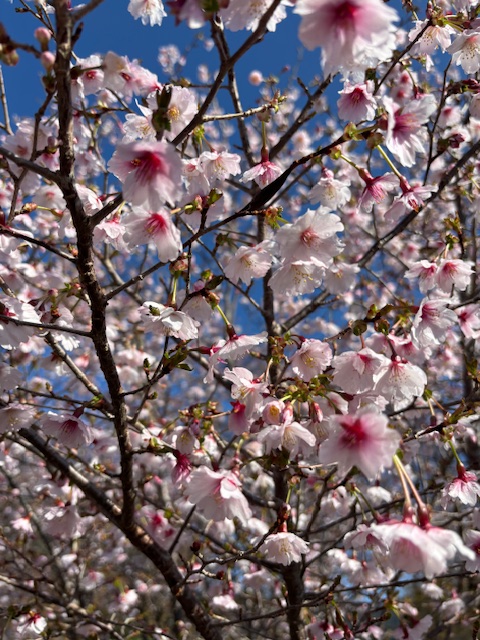
SUN 07 April: day starts off damp and grey; train, one-hour south to Kamakura; by mid-morning, sunshine gives way to 70-degrees, and t-shirt weather. Drop off backpack at AirBnB and visit Great Buddha of Kamakura; hollow, bronze construction, dates back to 1251, and originally, painted in gold-leaf. Take hiking trails around the city; with heavy spring rain, muddy and slippery, and get off the trails at Komachi-dori Street, city’s congested pedestrian mall. Visit Tsurugaoka Hachimangu Shrine, which is choked with people, some dressed in formal kimonos. Depart along the city’s main boulevard, planted with double row of cherry trees; the sight is truly spectacular, and difficult to give justice with a camera.
TUE 09 April: the day was moist … would be an understatement. Rain at sunrise gives way to heavy rain and wind by mid-morning; weather gives way to clearing skies by mid-day, not before shoes become soaked. Backpack is pretty durable, but, slide over the rain cover. Three trains, 90-minutes, Kamakura > Ofuna > Odawara > Hakone-Yumato. Wait for rain to ease before walking to hostel, which offers great views of the valley below. Quiet afternoon, and enjoy hostel’s natural hot spring; onsen are quite popular in this mountainous, sulfur-producing region.
Wake up with a headache, at least it’s not a migraine. Clear blue skies, 45-degrees; take 7am Hakone-Tozan train to its peak at Gora station; train takes an hour to climb three switchbacks to change direction, and “zig-zag” up the mountain pass. Switch to cable car, which climbs the steep, 20% grade to Sōunzan station. Switch to gondola, which offers dramatic views of snow-capped Mt. Fuji, 40-miles north. Exit gondola at Lake Ashi, and board “pirate ship” to Motohakone-ko; disembark, and express bus back to Hakone-Yumato station. Two-day Hakone Freepass allows guests to travel this scenic mountain loop for $30 USD; it also includes onward three-bus transportation to Sengoku, Gotemba, and Kawaguchiko. Another quiet afternoon, and enjoy the onsen, followed by cold shower.
THU 11 April: early morning, depart 6am from Hakone to Kawaguchiko; three buses, connecting at Sengoku and Gotemba. It’s a thin bus schedule; if miss the morning bus, only alternative is $150 taxi for 35-mile drive through the mountains. Despite the concentration of tourists in Hakone, few tourists on the bus. Needed to do homework and understand this route, as there is little to no guidance en route, and little assistance in English. Arrive 10:30am, referred to as the Fuji Five Lakes region.
Mt. Fuji is 12,400-foot active stratovolcano, which features near-symmetrical cone. Mt. Fuji lies at the convergence of three tectonic plates; Amurian Plate, Okhotsk Plate, and Philippine Sea Plate; volcano’s last eruption was 1707.
Temperature is palpably cooler in the region, near-freezing temperatures at night; tree foliage is considerably behind Tokyo; locals are just beginning to plant gardens. Region is more rural than other parts of Japan visited thus far, and in some places, it appears ragged, ratty, and run-down. As sunset approaches, pretty wiped out; long day.
Crash hard after sunset, but sleep well, and wake up the next morning, feeling human. Everywhere I turn, Mt. Fuji is in the background, but, often times, the mountain is shy, and hides behind the clouds.
SAT 13 April: clear skies, treated to view of Mt. Fuji walking to local bus station. Station is crowded and chaotic; once on-board the bus, two-hours to Tokyo, despite congested traffic. Arrive Shinjuku station, greeted by a crush of people. Shinjuku is Tokyo’s busiest station, hosting more than three-million daily passengers. Exchange currency, visit Golden Gai neighborhood, tight warren of whiskey bars that comes alive at night. Subway north towards Arakawa, check into hostel. Find affordable haircut, and low-cost laundromat; my clothes rejoice.
Wake-up with striking headache, not quite a migraine, but, pretty close. Up and about, slow morning, not going to light the world on fire. Visit local neighborhoods on foot, comfortable t-shirt weather, and observe local life unfold.
MON 15 April: subway to Tokyo station; station remains overwhelming, serving as a hub for subway, local trains, and high-speed, long-distance trains. Information desk provides two-page terminal map, and make my way to dedicated platforms for the high-speed, Shinkansen (bullet) trains. Completed reservation on-line, scan QR code at kiosk to print out ticket and boarding pass. Travel at 180 mph (300 km/h), and reach Kanazawa, five-hundred miles northwest, in three hours. Train passes through snow-capped Nagano, which hosted 1998 winter Olympics, and lose count of mountain tunnels. Refreshing to escape Tokyo’s skyscrapers, and observe low-slung Japanese neighborhoods; kawara tile roofs reflect the bright sunlight.
Rain in the morning gives way to sunshine; walk four miles to visit Daijō-ji Temple. Return to the city, pass along D.T. Suzuki Museum and Shofukaku Garden, and Higashi Chaya District, which features traditional wooden buildings.
Visit Nagamachi district, well-preserved, Edo-era samurai homes, with cobblestone streets and earthen tiled walls, en route to Kanazawa Castle ruins, located in the heart of the city; visit Omicho Market, which offers a great variety of street food.
FRI 19 April: Kanazawa train station, large as modern shopping mall; is it a shopping mall with a train station, or, train station with a shopping mall. There is nothing one can’t buy here, and with high-end shops, it’s easy to drop a lot of money quickly. Thirty minutes on Shinkansen to nearby Fukui. Drop off backpack at nearby AirBnB.
Local bus to Eihei-ji Temple, where Dōgen Zenji brought Sōtō Zen Buddhism from China to Japan in 1227. Up to 200 monks live at the monastery, steeped in zazen, or sitting meditation, as its central tenet.
Besides Eihei-ji Temple, the only other key attraction in Fukui is the dinosaur museum, largest fossil museum in the country. Wake up with a headache, that becomes worse as morning unfolds. Explore city on foot, mostly underwhelming; forced to be creative, if nothing else, observe how the Japanese go about their daily lives. Host at guest house practices her English with me; my intention is to be polite, but, being shy and introverted, it becomes a bit tiring after a while (hours not minutes).
Last day in Fukui, weather holds, but, struggle to find anything of interest. Sit down at train station – as much shopping mall as train station – to people watch, what introverts do for fun. Serendipitously, recognize group of people from Houston Zen Center. They arrived from Tokyo, en route to Eihei-ji for its 700-year anniversary.
MON 22 April: Shinkansen (bullet) train from Fukui to Tsuruga, transfer, onward to Kyoto. Station is crowded – long queues, wrong queues – ticket agent types furiously and frenetically into the keyboard; prints onward ticket to Hiroshima.
Cherry blossoms give way to flowering azaleas, in wonderful shades of pink, purple, and white. Drop off backpack at local hostel; visit Nishiki Market – foodies delight – sea urchin, octopus, sake, and whiskey. City is crowded, can only imagine what it will be like when Golden Week commences on Monday.
Forecast for Wednesday calls for solid day of rain, plan to see as much as possible. Crisscross the city, train, tram, subway, and walk fifteen miles. Highlights include: bamboo forest, Kinkaku-ji (gold) Temple, Kyoto Imperial Palace, vermilion-colored Fushimi Inari Taisha shrine, and Toji Gojunoto (five-story pagoda).
Often times, struggle to connect meaningfully with people. At the hostel, meet Ingrid, from Norway; she lives and works in London. She is cycling across Japan for three months. Completely fascinating and interesting; could talk with her all day.
Following two days of rain, wake up to bright sunshine, am I not solar powered. Express train, Kyoto to Kobe, arrive early in the morning, before trash pick-up, and wonder if Kobe is in competition with Paris. Visit Ikuta Jinja shrine and Chinatown. Train to Osaka, Japan’s third largest city after Tokyo and Nagoya, and walk through its enormous shopping streets, including the food scene at Kuromon Ichiba market. Train to Nara, and visit Great Buddha Hall (Daibutsuen) at Todai-ji Temple. Train to Kyoto; having walked twelve miles, return to hostel tired, hungry, dehydrated, and grumpy.
During the course of the day, do not encounter single trash can. Following the 1995 poison gas terrorist attack by the Aum Shinrikyo cult in Tokyo, Japan removed most trash cans from public spaces; riddle solved.
Bus to Nagoya, two hours, but, Japan is slow to open in the morning. Explore city on foot. Air Force base returned to Japan long ago, now Nagoya Airport. Nagoya is sprawling industrial city, home to Toyota, second largest city after Tokyo. Okonomiyaki for lunch, savory pancake dish, before returning to Kyoto, on Shinkansen, 30-minutes.
Merrell zero-drop shoes disintegrate after 9-months and 1,500-miles; day trip to Osaka to purchase new pair at the mall. Enter the mall when it opens at 10:30am, store employees bow as shoppers enter, almost, un-nerving.
Final day in Kyoto, glorious sunshine, 82-degrees. Explore on foot, pedestrian neighborhoods of Sannenzaka and Ninenzaka, traditional Kyoto homes and shops line narrow, cobblestone-paved roads. Walk along Philosopher’s Path, meandering footpath lined with cherry trees and small stream; exchange din of traffic for birdsong.
MON 29 April: after 50-miles on foot, pleased to move on; Shinkansen (bullet) train from Kyoto to Hiroshima, 90-minutes. Today marks beginning of Golden Week, which combines four public holidays; many Japanese take off the entire week, and many Japanese companies close down; period is often the longest vacation of the year for many Japanese. Travel reservations recommended due to high demand.
Visit Hiroshima Peace Memorial Park and Museum; reservation on-line. First visit to the museum in 1996; on temporary assignment from Okinawa to Marine Corps Air Station Iwakuni. For the life of me, don’t recall how I figured out how to get from the military base to the city center without smart phone or Lonely Planet guide book.
Early morning, December 1996, stepped off streetcar, and viewed the Atomic Bomb Dome, as if, the image leaped off the page of a history book. Directly below the blast epicenter, it was one of few buildings left standing. Experience was emotionally overwhelming – choke up – and no less overwhelming almost thirty years later.
Bombing of Hiroshima and Nagasaki killed between 130,000 and 225,000 people, mostly civilians. Bombing decision may be explained – even rationalized – but difficult to justify. Wanton and wholesale killing of civilians should never be justified.
Cost:
Cumulative travel costs, during past 127-days. Spend $120 USD cash in one month, indicative that credit card is not universal (ie. local train and subway). In contrast, only spent $20 USD during three months in New Zealand and Australia.
Lodging: $3,421 total | $27 day
Transport: $5,330 total | $42 day (plane | train | bus | ferry | taxi)
– Flight | Sydney > Tokyo: $765 ($77 per flight hour)
– Train | Tokyo > Kanazawa: $111 ($37 per hour | bullet train)
Food: $327 total | $3 day
Other: $6,998 total | $55 day (FX | ATM | visa | tourism | RV & motorbike)
Total: $16,075 total | $127 day | $46,200 annualized
Conclusion:
After one month in country, share several observations, not judgments:
– Often recipient of politeness in lieu of efficacy; the decorum is frustrating
– Many Japanese wear uniforms, even a dark suit; appears as form of social hierarchy
– Little cultural willingness to color outside the lines, highly rules-based
– Entered pharmacy looking for razor blades, kicked out for not wearing a mask
– Board subway car, cartoon-like chimes sound when train prepares to depart
– Number of senior citizens bent in half; unable to stand-up straight
– Fashion includes short skirts worn with tall, knee-high socks
– Shiba Inu dog breed, smallest of the six dog breeds native to Japan, very popular
– Matcha green tea ice cream is very popular
– Rice is prohibitively expensive; $1 USD (1-pound) in United States; $5 USD in Japan
– Few trash cans in Japan; most areas free from debris, other areas, not so fortunate
– One more month in Japan; waning interest in ubiquitous shrines and temples
 garthmonroe