Introduction:
Planning to travel nine months next year, in 2023. Three months during the winter, and six months during the summer.
Winter:
Fly to Panama at the end of December, visit Central America, travel along the Pan-American Highway via first-class bus. Airfare expensive; used frequent flier miles on United Airlines.
January, anticipate passing through Panama, Costa Rica, Nicaragua, Honduras, El Salvador, Guatemala, and Belize. I’ve wanted to travel this region for many years; favorable weather during winter; temperatures are mild, weather is dry, outside of monsoon season.
February, visit Mexico’s Yucatan peninsula: Chetumal, Tulum, Playa del Carmen, Merida, Campeche, Palenque, and San Cristobal de las Casas, before traveling along the Mexican Riviera: Salina Cruz, Puerto Escondido, Acapulco, Zihuatanejo, Manzanillo, Puerto Vallarta, and Mazatlán. Bus routes are thin between Zihuatanejo and Puerto Vallarta; may need to route through Guadalajara.
Mexico is a large country; and merits a return trip. I often find that travel is iterative, to see a place, to experience a place, requires more than one visit.
March, travel through Mexico’s interior: Durango, Parral, Chihuahua, and Juarez, walk across the border to El Paso; Greyhound bus to Houston, to visit friends. Bus provides a different point of view to view the country, different people. Could fly to Houston, but where’s the adventure. If I was daring, I would hitchhike across Interstate-10.
In terms of safety, I read the State Department’s travel advisories. In general, Central America is less safe than Mexico. Honduras is rated “Level 3 – Reconsider Travel.” I still plan to visit Honduras, but will limit my travel to the state capital of Tegucigalpa, and will try to avoid the Comayagua section of the city. Most of the states along the Mexican Riviera are rated “Level 4 – Do Not Travel.” Some of the Mexican states that I visited in 2022 are also Level 4. Using the State Department’s classification system, travel risks in these regions include, but are not limited to: crime (C), terrorism (T), civil unrest (U), health (H), natural disaster (N), time-limited event (E), and other (O).
Summer:
April, plan to visit family and friends in Connecticut, and resume travel at the end of the month. Anticipate flying round-trip, New York to London, once the booking window opens.
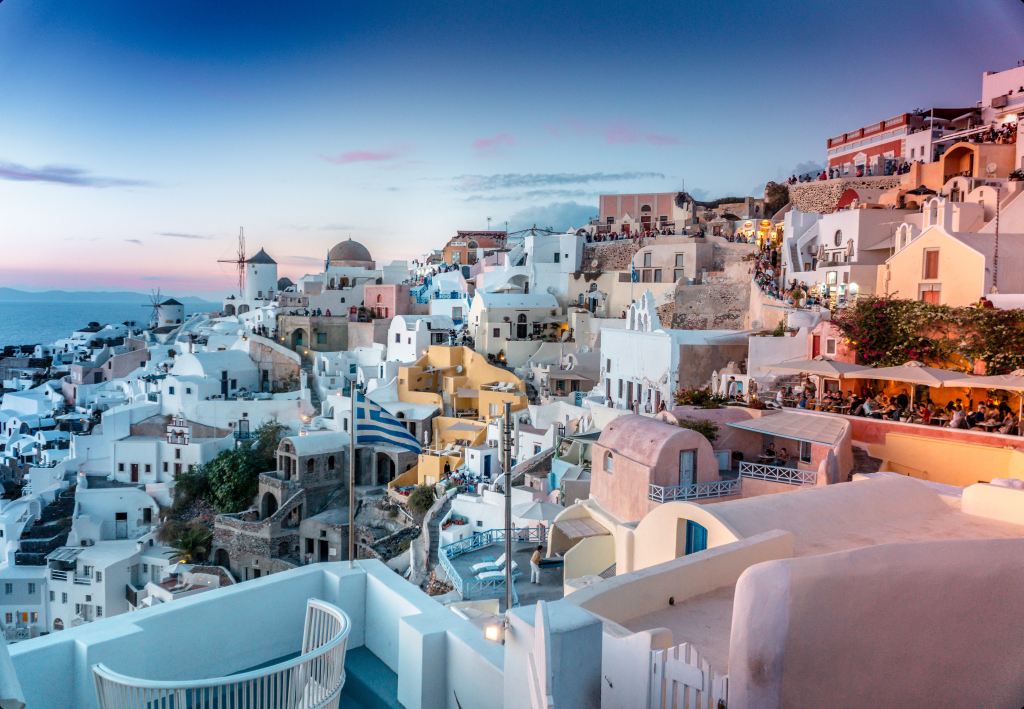
May, plan to visit Greece, travel slowly from London to Paris, via train, onward to Italy, and overnight ferry to Greece.
June, plan to visit Turkey, utilize the country’s well-established train network to visit its far corners, before traveling to the nearby island of Cyprus. The Man in Seat 61 is a useful website when planning overseas train travel.
July and August, plan to visit the Middle East, including Lebanon, Jordan, Israel, Saudi Arabia, Bahrain, Qatar, United Arab Emirates (UAE), and Oman. My niece works in UAE, so plan to visit and say hello. The region will be hot during the summer, oh well.
I would have enjoyed traveling to Iran. It’s difficult, but not impossible to obtain a visa, but, independent travel is not authorized. There are tour companies, but there are no available tours. US State Department rates Iran as “Level 4 – Do Not Travel.” Rick Steves visited Iran in 2008, with an open-mind, had a valuable experience.
Lonely Planet Middle East guidebook shows a border wall painted with graffiti, “make hummus, not walls.” Guidebook also includes a warning: “at the time of writing, Syria is one of the most dangerous places on the planet. To put it simply, you can’t go. And if you can, you shouldn’t.” Good safety tip.
Flipped through the index, and was surprised to see a reference for minefields. Turned to the appropriate page and read: “some parts of Israel, particularly along the Jordanian border, are sown with antipersonnel mines; flash floods sometimes wash away old mines, depositing them outside of marked minefields.” Typically, when I travel, my biggest concern is falling into a squatty-potty.
September and October, plan to visit North Africa, including Egypt, Tunisia, and Morocco. Libya and Algeria are both “closed” to tourists. Anticipate taking ferry from Morocco to Spain, across the Strait of Gibraltar, visit Spain and Portugal via train, as I route myself back to Paris and London.
Administrivia:
Rough budget for travel is $16,000. $2,000 for Central America and Mexico ($25 per day), and $14,000 for Mediterranean ($75 per day). If inflationary pressures to continue, upper end could be $20,000, largely driven by costs in Europe (up to $100 per day).
I considered a nine-month trip, visiting Australia, New Zealand, Japan, China, Nepal, Tibet, and India; but wasn’t sure if Australia and China would continue to arbitrarily close its borders due to COVID.
During the fall, I’ve been doing some homework to ensure that I’m an informed traveler; visa requirements, vaccinations, electricity (outlet, voltage, frequency), foreign currency (ATM availability), ground transportation (bus, train, etc.), and lodging.
Don’t anticipate having advanced reservations, beyond five or seven days. I have a rough guide of where I’m going and when, but nothing definitive. After traveling for much of 2022, hope that this provides more flexibility, if the trip is going well, or less than well. Traveling through Central America, bus tickets are purchased same day, or one day in advance.
I register my travels with the US State Department; if something goes “sideways” at least it wouldn’t be a complete surprise with the embassy or consular staff.
I usually don’t use Uber or taxi; I either walk or use public transportation. For this trip, I will use Uber or Taxi if necessary, out of safety. For example, if a bus arrives into town late, after dark, it’s likely best to take an Uber or Taxi. I recall a scenario when I visited Port-au-Prince Haiti (2017), I wasn’t in danger, but it would have been better to have paid for a taxi.
If things go badly, I have the means to stay in a high-end western hotel, or high-end AirBnB, or elect to fly instead of taking the bus.
Conclusion:
This isn’t Instagram travel, it’s not “sexy” or glamorous. As the trip approaches, sometimes there is a palpable sense of fear, discomfort, uncertainty, and dread. Hold onto your hats.
What is my intention, why do I travel. I’m not looking to “gain” something, but, I would like to experience the world, weaving my way from country to country. If my life ended tomorrow, I would regret not experiencing the world. The world is a large place, and traveling is often a humbling experience, it often teaches me patience, if that’s possible.
Travel is similar to practicing Zen Buddhism, as Suzuki Roshi suggested, ”In a fog, you do not know that you are getting wet, but as you keep walking, you get wet little by little.”
I have great fondness for Anthony Bourdain, who said: “Travel isn’t always pretty. It isn’t always comfortable. Sometimes it hurts, it even breaks your heart. But that’s okay. The journey changes you; it should change you. It leaves marks on your memory, on your consciousness, on your heart, and on your body. You take something with you. Hopefully, you leave something good behind.”
 garthmonroe