Graduated with an MBA from University of Virginia, Darden School of Business in May 2005. Before joining JetBlue in June, the School asked me to write a one-page essay about my career decision, shared below.
It was a high time to join the company. David Neeleman (CEO) and Dave Barger (COO) hosted every new-hire orientation; I would also see them in the board room for various meetings. After getting promoted to manager, I saw Dave in the hallway; he invited me to coffee, and was instrumental in my leaving the corporate office, and moving into an airport. It’s odd, because many airport employees wanted to move into the corporate office.
I’ve been friends with John Owen for almost twenty years. He was the treasurer at Southwest Airlines, credited with purchasing more aircraft than any other person in the industry, went on to become JetBlue’s CFO, and took the company public in 2002. During my interview with John, having worked at Pratt & Whitney, we talked about jet engines. I sincerely enjoy my friendship with John; we meet up for lunch or dinner once or twice a year.
Holly Nelson was the controller; very experienced, very credible, very hard-working. When closing the books, she would send out these infamous emails to the finance and accounting team, with up to one-hundred detailed closing questions; her memory and attention to detail was second to none. After six months with the company, when it came time for year-end salary increases, she successfully lobbied on my behalf, without my asking, for a 25% salary increase. This is pretty unprecedented in the airline industry, where an annual salary increase might range between 0% and 3%. My intention when I joined the company, was to work hard, not complain, and let my results speak for themselves. There’s not a day that goes by, that I’m not grateful for Holly.
My first role with JetBlue was supporting technical operations, anything to do with aircraft and jet engines. My first day was negotiating a one-billion dollar, ten-year engine maintenance agreement with MTU of Germany. I spent more time on the TechOps floor then with finance or accounting. I worked closely with Terry Inglis, Materiels Director, and he was instrumental in my development as a manager. Terry takes great care of his people; there were times when we could shut the door to his office and have meaningful discussions about leading teams. Imagine that much of what I manifested as a business leader, leading teams, is what I learned from Terry’s example. I met Terry for coffee several years ago in southern California. Not a day goes by that I’m not grateful for Terry.
After moving from finance to supply chain, I had the opportunity to work with Tom Anderson. After roles with Boeing, Airbus, and Virgin America, he’s now the Chief Operating Officer at Breeze Airways. I always enjoyed working with Tom, and learned a lot from his guidance.
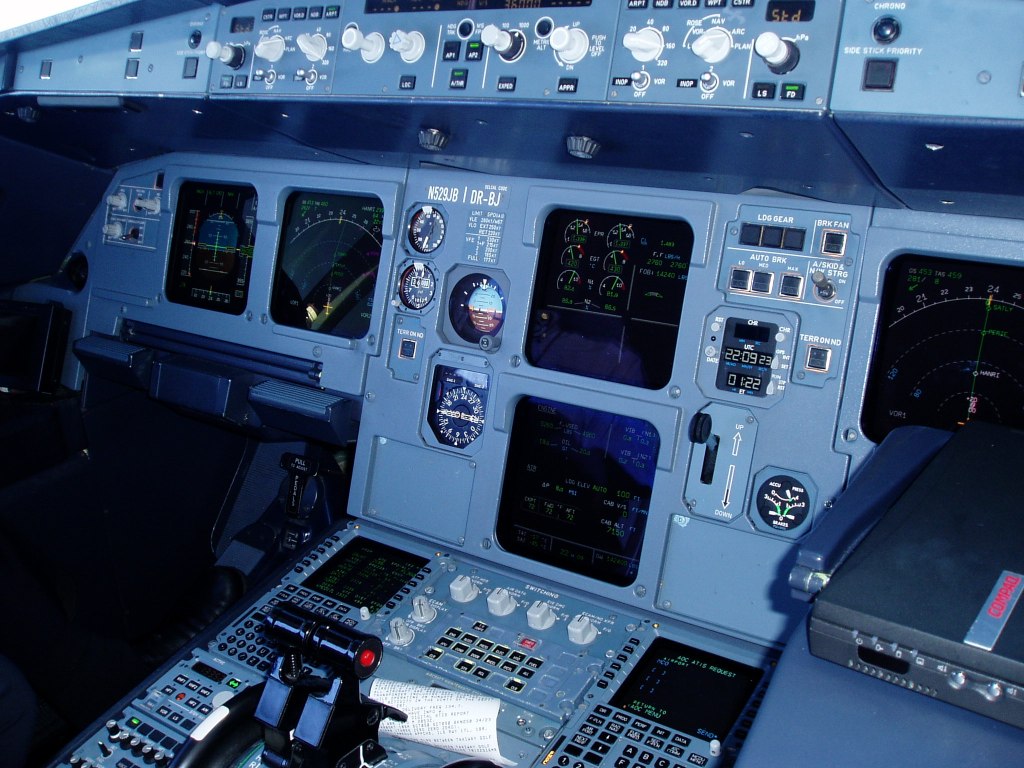
There were other great experiences with JetBlue. I received permission from the Chief Pilot to be in the flight deck (cockpit) for a flight from New York City to Orlando; an amazing experience. I had the opportunity to “train” with an instructor on the full-motion, Embraer 190 flight simulator in Orlando. I also had the opportunity to “hang out” at the airline’s JFK maintenance hangar and Maintenance Control, given my role with TechOps, and the JFK Airport Operations Center, which controls all aircraft movement on the ramp.
One of my colleagues, Leo, had a coffee mug with the inscription, “I like the smell of jet fuel in the morning,” which was certainly true for me. On weekends, I would work the JFK “ramp” (below the wing of the aircraft), either at domestic terminal six, or international terminal four. Would wake up at 1:00am on Saturday to be ready to work before 4:00am, driving in from South Norwalk, Connecticut. I would also work the ticket counter, often on busy holidays, and also the departure concourse, boarding customers before a flight.
Worked at JFK in February 2007, after the airline’s “Valentine’s Day Massacre” following a severe winter storm. Worked inside the terminal, re-booking customers to their final destination. Customers were understandably angry, and I tried to respond as helpful and kindly as possible. One of the airport directors watched me all day; in the evening, she pulled me aside, and impressed with my grace under pressure, offered me the opportunity to become General Manager at Austin Bergstrom International Airport, in Austin Texas.
Austin Bergstrom (AUS) moved to the site of a former Air Force base in 1999; the airport was less than ten-years old when I worked there; compared to working at JFK, the facility was fantastic. The airport had live music on the concourse in the afternoon; the airport restaurants, were all local businesses; no fast food chains. I enjoyed working at the airport; it was always a high energy environment.
My intention at JetBlue, was to become CFO. By working in operations, I wanted to have hands-on experience running an airline, to be a more effective, and credible airline CFO. My days started early; up at 3:00am and at the airport before 4:00am, before my team arrived; I lived in Montopolis, just minutes away. Reviewed staffing plan for the day, reviewed in-bound aircraft, noting any maintenance issues, and reviewed passenger manifests, noting anyone on the “no fly” list.
At the time, most customers still used paper boarding passes, printed at the airport, or at home. I would print a blank boarding pass each morning, and fold it in my shirt pocket. As things went wrong during the day, I would write things down on the boarding pass, to be addressed later in the day, when I returned to my office. One of my crewmembers, Leanne, commented that I would “get things done” because I cared enough to write things down.
It was funny working in Austin; people would often comment that I looked like Lance Armstrong; some people might mention that Lance Armstrong looked like me. I received these comments almost every day at the airport. Lance is from Austin, and I’m one year older. This was before his “fall from grace” with the Tour de France, and drug doping.
There are “funny” stories working at the airport, it’s a numbers game, with that many people passing through on a daily basis. One day, a customer late for his flight, ran out the emergency exit doors, onto the ramp, chasing his aircraft; later resolved when he was picked up by airport police. George W. Bush was the President at the time; his daughters would periodically fly from Austin to New York on JetBlue; the Secret Service would call my office to block out the necessary seats on the aircraft. Other days, my team would ask me to work in Baggage Claim. I often had to tell people that their luggage was getting a suntan in Aruba. The JFK flight to Austin departed at 7:00am (AUS airport code); the JFK flight to Aruba departed at 7:05am (AUR airport code). Luggage between these two flights were frequently mishandled. Some customers were flying to Austin for weddings; it was always disappointing when the baggage containing their suits and dresses were displaced.
Some days I would work ticket counter, and sometimes, customers could be rude and obnoxious. With a smile, I would check them in for their flight, and would code the boarding pass for additional security screening at the TSA checkpoint (the TSA would recognize the mark on the boarding pass, the customer would not). There’s a lesson here: be nice to people, especially people in service economy roles.
One Easter Sunday, I was approached by the Transportation Security Administration (TSA); the TSA had a security breach that affected one of my flights. The flight was half-way through boarding. When the jet bridge is in contact with the aircraft, it is the general manager’s “aircraft.” Once the jet bridge pulls away, and the aircraft brakes are released, it is the pilot’s “aircraft.” I walked down the jet bridge, informed the captain, and then got on the intercom to inform customers that they would need to be re-screened through security. All the luggage was removed, all the customers removed, bomb-sniffing dogs brought on-board, and all customers re-screened by the TSA. The flight took a two-hour delay, but I didn’t wish to live with the alternative consequences. Customers may not always recognize that airline employees want the flights to operate on-time, without cancellation, and without delay, as much as the customers.
One of the challenges working at the airport, is that it often felt like “groundhog day.” Almost every day felt the same, with never-ending operational issues. If I had remained with the airline industry, I wonder if I would have become bored or burned out.
After two-years with JetBlue, I was asked to move to Canada to become CFO for an early-stage biotech company. It was a difficult decision, but a valuable career and learning opportunity; the compensation was materially different, too. Not being a scientist, biotech may be a challenging industry; I always tried to learn, but it never matched my passion for the aerospace and airline industry. I’m financially better off for the move, but often questioned the move in hindsight.
After working in the airline industry, there are three travel rules that I like to keep in mind:
1. Take the first flight of the day. This is the best chance for a person to travel on-time, as airlines have a keen focus on “launching” these flights on-time; if the first flight of the day is delayed, that delay tends to cascade through the system, keeping in mind that the average aircraft might be in-service 12 to 15 to 18 hours per day; a five-minute delay at 7:00am could be a multi-hour delay by 7:00pm. I’m also a big fan of red-eye flights from the west coast to the east coast, and prefer “hitting the ground” at 6:00am with the opportunity to be productive; I can “crash” later from fatigue.
2. Travel non-stop, don’t connect. It’s much easier to travel from A to B non-stop than it is to connect; if connecting, there’s a greater risk that a person will miss their connection; further, airlines tend to protect the operational integrity of the “mainline” flights, than connecting flights, especially to regional or smaller airports. Further, because airlines now fly at much higher capacity (>90%), if your connecting flight is cancelled, it’s much harder to get re-booked in a timely manner. I will go out of my way using public transportation to fly non-stop. For example, when visiting family in Connecticut, I’ll travel from Houston (IAH) to Newark (EWR) non-stop, where there are fifteen flights per day, and then take the train to Connecticut, rather than connecting through Newark for a flight to Hartford (BDL).
3. Carry bag on-board, don’t check luggage. From an operations perspective, airlines struggle with operating aircraft on-time, getting passengers from point A to point B; airlines are even worse at moving luggage, without mishandling. Further, if you need to make a last-minute change, for example, taking an earlier flight, it’s more difficult if you’ve already checked luggage. I used to visit friends in Colorado to go skiing, and would FedEx my skis, rather than take them to the airport. One day, I was leaving Ottawa Canada, and departed one-day early due to a very large snow storm that would close the airport; I got on the last flight of the day at the last minute, because I had no luggage, just me and my carry-on bag (with my ski boots).
Ugh. Crude oil futures hit a record high today. I went to the gas station, filled up my car. This got me thinking about the airlines. You know, it probably goes something like this: pilot leans out the window to the attendant below and says “filler up.” Six thousand gallons later – zip zip – charge it on the company credit card. Multiply this times a couple hundred airplanes and that’s one big fuel bill. And you figure the airlines couldn’t make a profit when fuel was cheap. Since 1927, the U.S. industry has managed to lose almost ten billion dollars. Sort of makes you wonder who’s running the show. I mean, it doesn’t take a genius to lose money – I can do that.
This is just a long way of saying that a person would be crazy to join an airline – but somehow that’s exactly what I’ve done. Five forces model? Michael who? A hundred thousand dollars later and I’ve obviously learned nothing in business school. As school comes to an end, people ask me what I’m doing after graduation. I tell them. “Joining an airline.” After picking their jaw up off the floor the next question usually is “what were you smoking?” I answer, “Nothing. But I might start.”
Kidding aside, people have been curious why I’m doing what I’m doing. The simple answer is that Jim Collins made me do it. I read “Good to Great” last year and even got to see Jim last fall. He suggests that the hedgehog concept, in part, allows organizations to go from good to great. The concept applies to individuals as well: what are you passionate about – what can you be the best at – what drives your economic engine.
By now, my classmates are painfully aware that I’m passionate about airplanes. My Dad used to take me to air shows. I even followed my Dad to work at the local jet engine company. I’m surprised that I haven’t driven off the road while watching planes make their approach into the local airport. So there is really nothing I don’t like about the industry – and I think that this is a competitive advantage. During one airline interview I was asked what l would like to do. I responded, “Anything. Throwing bags, servicing lavatories, even finance and accounting.”
Joining an airline wasn’t really this easy. It took a lot of work, soul searching, and perseverance. I contacted one airline sixteen times before getting the first interview. After making it through the interviews I received an offer. That’s when economic reality set in, or rather, came crashing down. Losing money decade after decade, many airlines offer compensation packages that are considerably lower than the MBA average. How low you ask? Think break-even.
I had other job offers. Some with six-figure salaries; others with fancy titles. But there was only one place that I wanted to be, and the thought of not pursuing my dream was devastating.
Jim Collins suggests that people must never confuse faith that they will prevail, with the discipline to confront the most brutal facts of reality. So I closed my eyes and took a deep breath. I drank the blue Kool-Aid and joined an airline.
Ugh. Crude oil futures hit a record high today. The airline that I’m joining will use over three hundred million gallons of jet fuel this year. I might need an air sickness bag. I’m not a millionaire and it will probably take me ten years to reach a six-figure salary. I will work for the rest of my life. I’m going to be able to pay my bills and student loans. But more important, I don’t have to live my life in the future. For the first time in my life, I am at peace with myself. I can wake up every day and enjoy the present – working with airplanes.
I will close with a final thought from Jim Collins. “It is impossible to have a great life unless it is a meaningful life. And it is very difficult to have a meaningful life without meaningful work.” Life is about making choices. My choice may not be right for everyone, but it is the right choice for me.
 garthmonroe